
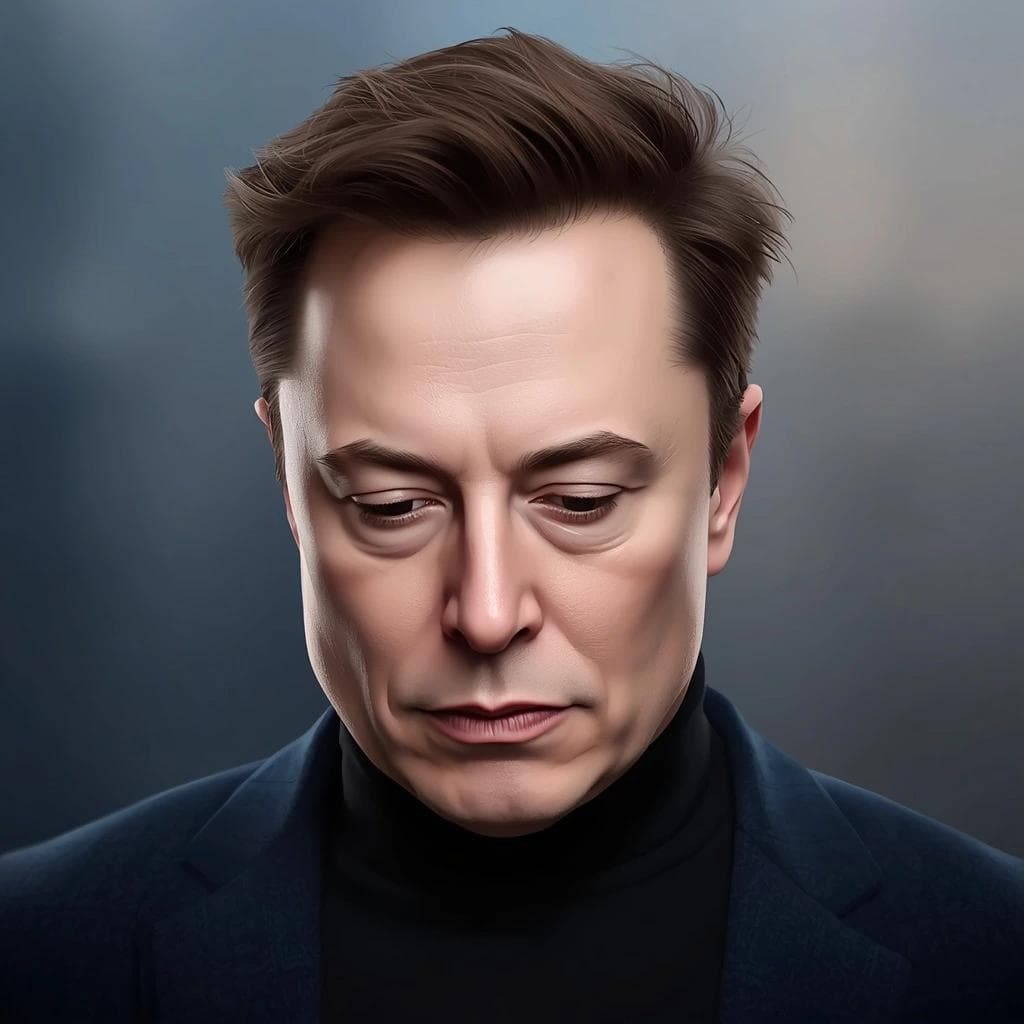
The question of what drives one of the most polarizing and prolific billionaires of our time has fascinated the public for years. From revolutionizing the electric vehicle market with Tesla to pioneering private space exploration through SpaceX, Elon Musk’s mind operates on a different frequency. But it wasn’t until a highly publicized television appearance that the public got a clinical label for that frequency.
So, is Elon Musk autistic? The short answer is yes. But to truly understand what that means—for Musk, for the companies he leads, and for the broader tech industry—we need to look beyond the label and examine how neurodivergence shapes innovation, leadership, and the way we perceive "normal."
In this comprehensive exploration for Sovereix, we will break down the facts of Musk’s diagnosis, the difference between Asperger’s and Autism Spectrum Disorder (ASD), how his cognitive profile fuels his success, and the broader impact of neurodiversity in the technology sector.
The SNL Revelation: A Watershed Moment for Neurodiversity
On May 8, 2021, Elon Musk stepped onto the stage of Studio 8H to host Saturday Night Live (SNL). During his opening monologue, he made a groundbreaking admission that immediately made international headlines.
"I'm actually making history tonight as the first person with Asperger's to host SNL," Musk told the audience, followed by a trademark deadpan delivery: "Or at least, the first to admit it."
He went on to address his often-controversial public persona directly. "Look, I know I sometimes say or post strange things, but that's just how my brain works," he explained. "To anyone who's been offended, I just want to say I reinvented electric cars, and I'm sending people to Mars in a rocket ship. Did you think I was also going to be a chill, normal dude?"
While fact-checkers quickly pointed out that former SNL cast member Dan Aykroyd (who has also been open about his autism diagnosis) had previously hosted the show, Musk’s announcement was undeniably a watershed moment. It brought the conversation about neurodivergence—a concept encompassing variations in the human brain regarding sociability, learning, attention, mood, and other mental functions—into the mainstream business and tech lexicon.
Asperger’s Syndrome vs. Autism Spectrum Disorder (ASD)
When Musk revealed his diagnosis, he specifically used the term "Asperger's." For many reading this, the terminology can be confusing. Is Asperger's the same as autism?
Historically, Asperger's syndrome was considered a distinct diagnosis. It was characterized by significant difficulties in social interaction and nonverbal communication, alongside restricted and repetitive patterns of behavior and interests. However, unlike other forms of autism, individuals diagnosed with Asperger's typically did not experience significant delays in language or cognitive development.
In 2013, the American Psychiatric Association published the fifth edition of the Diagnostic and Statistical Manual of Mental Disorders (DSM-5). In this major update, Asperger's syndrome was officially retired as a standalone clinical diagnosis. It was folded into the broader, more encompassing category of Autism Spectrum Disorder (ASD).
Medical professionals recognized that autism is exactly that—a spectrum. It affects individuals in vastly different ways. Today, someone presenting with the traits Musk described would be diagnosed with ASD. However, many adults who were diagnosed prior to 2013, or who strongly identify with the specific traits historically associated with Asperger's, continue to use the term to describe their neurodivergence.
How Neurodivergence Shapes Elon Musk’s Leadership and Innovation
Understanding Musk's neurodivergence provides a fascinating lens through which to view his extraordinary achievements and his highly publicized controversies. Autism is not a monolith, but certain cognitive traits often associated with the spectrum are distinctly visible in Musk's approach to business and engineering.
Here are the key ways neurodivergent traits manifest in his leadership:
1. "First Principles" Thinking and Intense Systemizing
A hallmark of many individuals on the autism spectrum is a strong aptitude for systemizing—the drive to analyze or construct systems and understand the rules that govern them.
Musk is famous for his adherence to "first principles" thinking. Rather than relying on analogy or how things have been done in the past (the standard corporate approach), he boils a problem down to its fundamental, undeniable truths and builds up from there. When experts said battery packs were too expensive to make electric cars viable, Musk didn't accept the industry norm. He looked at the fundamental material cost of the metals required and realized that if he built the batteries from scratch, the cost would plummet. This deep, systemic, rule-based thinking is a powerful asset in engineering and disruptive innovation.
2. Hyperfocus and Deep Expertise
Another common trait of ASD is the ability to hyperfocus on specific, intense interests. While neurotypical individuals might find their attention naturally drifting, a neurodivergent mind can often lock onto a complex problem and hold that focus for extraordinary lengths of time.
Musk’s work ethic is legendary, famously sleeping on the floor of the Tesla factory during production "hell." His ability to absorb massive amounts of technical data—from rocket propulsion to neural interfaces and hold that complex architecture in his mind allows him to act as chief engineer across multiple billion-dollar enterprises simultaneously. This hyperfocus transforms a special interest into industry-dominating expertise.
3. Unconventional Communication and Social Dynamics
The social communication challenges associated with ASD are often the source of Musk’s public friction. Autism can affect how an individual processes non-verbal cues, understands social hierarchies, and filters their thoughts for public consumption.
Musk’s communication style is often blunt, highly literal, and devoid of traditional corporate diplomacy. While this can lead to massive PR headaches and volatile stock prices—such as his infamous "funding secured" tweet or provocative memes—it also cultivates a perception of raw authenticity. To his millions of followers, he doesn't sound like a PR-managed CEO; he sounds unfiltered. However, this same trait has led to significant criticism regarding his demanding management style and lack of empathy for employee work-life balance.
The Broader Impact: Neurodiversity in the Tech Industry
Elon Musk is arguably the most visible neurodivergent CEO on the planet, but he is far from the only one in the technology sector. In fact, the tech industry has long been a sanctuary for unconventional minds.
The skills required for high-level coding, engineering, and data analysis—such as pattern recognition, sustained attention to detail, and systemic logic—often overlap beautifully with the cognitive profiles of individuals with ASD, ADHD, and dyslexia.
To visualize the current landscape of neurodiversity in the tech workforce, consider the following data:
The State of Neurodiversity in Tech: Key Statistics
| Metric / Category | Data Point | Industry Context |
|---|---|---|
| Tech Workforce Representation | 10% - 15% | Estimated percentage of technology workers who identify as neurodivergent. |
| Industry Awareness | 64% | Tech employees who report being familiar with the concept and terminology of "neurodiversity." |
| Team Productivity Impact | Up to 30% Higher | The measurable increase in productivity observed in teams that actively embrace neurodiverse talent. |
| The Disclosure Gap | Only 18% - 50% | The alarmingly low rate of neurodivergent employees who feel safe enough to formally disclose their condition to HR or management. |
Data aggregated from recent workplace inclusion studies and neurodiversity advocacy reports.
The "Disclosure Gap": Why Stigma Still Persists
Despite the clear benefits of a neurodiverse workforce, the statistics above highlight a critical problem: the "Disclosure Gap." While estimates suggest up to 15% of the tech workforce is neurodivergent, only a fraction of those individuals disclose their diagnoses to their employers.
Why? Because stigma remains a powerful deterrent. Many employees fear that revealing an autism or ADHD diagnosis will result in them being passed over for leadership roles, infantilized by colleagues, or managed out of the company.
When a figure as prominent as Elon Musk publicly embraces his Asperger's diagnosis, it acts as a powerful counter-narrative to this stigma. It sends a message that a brain that works differently isn't just capable of participating in the workforce—it is capable of entirely dominating it.
Is Neurodivergence the Secret to High-Level Success?
It is tempting to look at Musk and conclude that his autism is his "superpower." This is a narrative frequently adopted by the media, portraying neurodivergent traits as a shortcut to genius.
While his cognitive profile provides distinct advantages in data processing, relentless focus, and unconventional thinking, it is not a magic wand. Autism is recognized as a disability for a reason; it comes with significant, often exhausting challenges.
The Double-Edged Sword of Musk’s Leadership Style
We must analyze the full picture of his leadership. The same blunt, unfiltered communication style that endears him to fans on social media has resulted in a famously intense and unforgiving corporate culture at his companies.
Reports from inside Tesla and Twitter (now X) frequently detail a chaotic environment driven by Musk's sudden shifts in focus and literal interpretation of urgency. His lack of adherence to social norms means he rarely engages in the "soft skills" of corporate leadership—consensus building, emotional intelligence, and diplomatic feedback.
Therefore, his success is not because he is autistic, nor is it in spite of it. His success is the result of a highly unique cognitive profile intersecting with extreme intelligence, immense privilege, relentless drive, and a financial ecosystem willing to tolerate his eccentricities because he delivers unprecedented results.
Conclusion: Redefining What It Means to Be a "Normal Dude"
To return to the user's initial query: Yes, Elon Musk is autistic, having publicly diagnosed himself with Asperger’s syndrome (now classified under Autism Spectrum Disorder).
His revelation did more than just explain his quirky Twitter presence; it fundamentally shifted the global conversation around neurodiversity. By standing on the SNL stage and challenging the audience’s expectation of a "chill, normal dude," Musk forced the business world to confront its own biases.
The tech industry, and the corporate world at large, has traditionally been built for neurotypical minds. Social networking, eye contact, subtle office politics, and nuanced diplomacy have long been the gatekeepers to the C-suite. Musk’s ascent proves that these are not the only metrics of value.
At Sovereix, we believe the future of entrepreneurial finance and technological innovation relies on diversity of thought. The next great breakthrough in sustainable energy, space travel, or artificial intelligence will not come from everyone thinking the same way. It will come from minds that see the rules, reject them, and build something entirely new.
And as Elon Musk has shown us, sometimes the most profound innovations come from brains that are simply wired differently.
For more in-depth analysis on the intersection of leadership, innovation, and the modern tech economy, continue exploring Sovereix Business Insights.